
A report by policy think tank The Dialogue reveals that India's artificial intelligence (AI) ecosystem is primarily constrained by a shortage of skilled talent and a lack of data standardisation, rather than market concentration. The study, which surveyed 308 stakeholders, found that talent availability and data usability are major concerns, with a significant reliance on open-source AI models.

The aim is to win over the country's enterprises, developers and startups as AI systems shift from answering questions to autonomously executing tasks.

Adani Group Director Jeet Adani and Bharti Enterprises Vice Chairman Rakesh Bharti Mittal highlighted the importance of infrastructure, energy, and connectivity in shaping India's AI ecosystem, emphasising Visakhapatnam's potential as a major digital gateway.

India has established a high-level inter-ministerial body, the AI Governance and Economic Group (AIGEG), to steer the country's national AI governance strategy. The AIGEG will coordinate policy across ministries and oversee cross-sectoral governance issues, supported by a Technology and Policy Expert Committee (TPEC).

'ChatGPT for Teens brings together learning and safety features in one unified experience, supporting active, collaborative learning outside the classroom while enabling more intentional and age-appropriate use of AI.'

IIT Madras's Centre of Excellence for Road Safety has organised its first international hackathon, focusing on AI in road safety. The event brought together participants from India and other BIMSTEC nations to develop data-driven, technology-enabled solutions for the region, which faces a high number of road fatalities annually. The hackathon aims to foster collaboration among governments, academic institutions, and regional bodies to address this critical issue.

A group of experts has voiced significant concerns regarding India's ethanol-blended fuel policy, citing potential negative impacts on land-use, agriculture patterns, food security, groundwater levels, and household incomes. They recommend a return to E10 fuel and a review of the policy's overall benefits versus costs to consumers and the environment.
A new report highlights that publishers need to adopt clear records, AI-specific provisions, and transparent disclosure of AI use to manage legal and commercial risks as the copyright framework around artificial intelligence evolves. Jointly developed by SS Rana & Co and Ficci, the 'Copyright In The AI Age' report emphasises practical governance measures while courts and regulators work on legal principles. It also addresses concerns about authorship, creators' rights, and research integrity amidst increasing AI integration in publishing.
A think tank, GTRI, has urged India to resist US pressure regarding its UPI policies, advocating for the defence of competition, policy autonomy, and the long-term sustainability of its payments ecosystem. This comes as the Lok Sabha passed a bill allowing charges on UPI transactions, a move GTRI suggests should not be influenced by foreign trade complaints.

A think tank, GTRI, has urged India to resist US pressure regarding its UPI policies, advocating for competition, policy autonomy, and a sustainable payments ecosystem. This comes as the Lok Sabha passed a bill allowing charges on UPI, and the US has criticised India's digital payment systems, raising concerns about the future of India's digital payment landscape.

Karnataka Chief Minister D K Shivakumar met with AI major Anthropic to discuss a long-term partnership aimed at accelerating AI adoption across governance, education, healthcare, research, and the state's startup ecosystem. The collaboration focuses on deploying AI solutions responsibly, ensuring data privacy, and developing AI-focused skilling programmes and an AI University.

Dr Lovi Raj Gupta, pro vice-chancellor, Lovely Professional University, explains how aspiring professionals can equip themselves for a competitive AI-driven job market.

HCLTech, India's third-largest IT services company, announced plans to establish a global technology centre and an AI-optimised data centre in Bhubaneswar, Odisha, with a total investment of approximately Rs 15,000 crore, marking its entry into the AI infrastructure business.
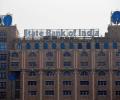
State Bank of India's latest report highlights a 'chalk and cheese' divide in the Reserve Bank of India's recent policy communications, with the Monetary Policy Committee minutes showing a hawkish tone while the Governor's statements are more data-dependent, leading to market uncertainty regarding future interest rate hikes.

India now ranks among the world's top three destinations for both AI and STEM talent, holding roughly a 6 per cent share of globally mobile AI talent and a 7 per cent share of STEM talent.
The HUMAIN AI Literacy Mission (HAILM) has been launched in India to integrate structured artificial intelligence education into schools nationwide. The initiative provides an age-appropriate AI curriculum for Classes 3-12, teacher training, and digital learning resources, aiming to equip students and educators with responsible AI understanding.
Former Chief Economic Adviser Krishnamurthy V Subramanian outlines India's strategy to become a USD 55 trillion economy by 2047. The plan hinges on leveraging its young demographic in AI, dominating sunrise sectors like space and defence tech, attracting FDI, and achieving sustained 8% GDP growth.

A new report indicates India has become the world's fifth most digitalised economy and ranks fourth globally in AI performance, driven by increasing AI adoption and a strong digital infrastructure.

The biggest challenge to widespread deployment is no longer AI. It is the financial and commerce infrastructure that was built decades ago for deterministic software and human interactions -- not autonomous AI agents.
Union Health Minister J P Nadda has emphasised the need for sound regulation, ethical oversight, and equity in the application of Artificial Intelligence (AI) to healthcare, speaking at the World Health Assembly in Geneva.

Prime Minister Narendra Modi has outlined a comprehensive plan to empower India's youth, including training one crore youngsters in artificial intelligence skills and providing free online coaching for competitive examinations, aiming to position them at the forefront of the nation's journey to become a developed nation by 2047.

A delegation of Indian startup founders and leaders visited the UK to explore collaborations in artificial intelligence and technology, aiming to strengthen the India-UK innovation corridor.

'At the end of the day, it is just another technology produced by the human mind.'
Jharkhand Assembly Speaker Rabindra Nath Mahato has called for the formulation of a more effective and stringent policy to curb cybercrimes, fraud, and digital scams. He highlighted the dual nature of artificial intelligence, which simplifies life but also presents serious challenges through misuse. Various experts and MLAs at a workshop emphasised the importance of cybersecurity education, personal digital responsibility, and empowering legislators to strengthen institutional resilience against cyber threats.
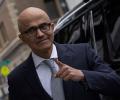
Microsoft CEO Satya Nadella on Tuesday announced plans to invest $17.5 billion in India to help build infrastructure and sovereign capabilities for the country's AI-first future, marking the third major AI-driven investment in the country in the past two months. Microsoft said that the $17.5 billion (around Rs 1.58 lakh crore) investment builds on the $3 billion (around Rs 26,955 crore) funding announced earlier this year, which the company is on track to spend by the end of CY (calendar year) 2026.

Recognising the growing use of AI/ML models by regulated entities across business and decision-making processes, the RBI said weaknesses in governance, oversight, risk management, and controls could expose institutions to financial, operational, compliance, and reputational risks.
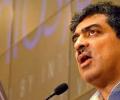
Infosys co-founder Nandan Nilekani predicts that large corporations in India will lose jobs due to automation and AI, while millions of small businesses will drive future employment growth. He advocates for deregulation, simplified business interfaces, and digital platforms to support small entrepreneurs and a gig economy workforce.

The BRICS Youth Ministers' Meeting, organised by India's Sports Ministry, successfully concluded in Visakhapatnam. Presided over by Sports Minister Mansukh Mandaviya, the meeting built upon previous youth engagements, focusing on developing young leaders and promoting youth cooperation among BRICS nations.
Pakistan is set to host the 14th South Asian Games in April next year across Islamabad, Lahore, and Peshawar, after a six-year delay. While the South Asia Olympic Council has approved the dates and venues, India's participation remains uncertain due to political tensions, despite its representative attending the planning meeting.

BMW India CFO Carsten Lammers has expressed surprise at the extensive scale and prolonged duration of tax and Customs litigation in India, advocating for faster dispute resolution and simpler procedures to ensure business stability.

The Unified Payments Interface (UPI) has completed a decade since its launch, becoming the backbone of India's digital payments ecosystem. It has seen exponential growth in transaction volume and value, expanding financial inclusion and setting a global benchmark for real-time payments.

India has attracted foreign direct investment (FDI) worth approximately 4,896 crore across 29 projects since May, following the government's relaxation of norms under Press Note 2 of 2026. The revised rules permit investment without government approval from entities with up to 10 per cent non-controlling ownership by land-bordering countries.
The government wants the AI Summit to give it an early start in becoming part of any global body setting policies for the emerging technology.

An initial analysis reveals that an Air India Airbus A320 flying from Phuket to Delhi experienced multiple hydraulic system failures, leading to a four-second loss of flight controls and a sudden 300-foot altitude drop, injuring 24 people. The incident is under investigation by the AAIB, and the pilot-in-command subsequently tested positive for a psychoactive substance, prompting Air India to implement mandatory testing for all its pilots.

India's UPI system continues its rapid growth, dominating retail payments. Recent amendments to the Payment and Settlement Systems Act allow for targeted Merchant Discount Rates (MDR) on high-value merchant transactions, aiming to create a self-sustaining revenue model for the ecosystem while keeping P2P and low-value payments free. This move could generate significant revenue and encourage ecosystem participation.

'All these reports and announcements by the US seem like attempts to gain a lever in trade deal negotiations with India.'

'A favourable base, last year's policy measures, the carryover impact of a good monsoon and improving earnings should all help.'

'This is a technology that will particularly benefit those who want to take agency over it'.
Nasscom's newly appointed Chairman, Srikanth Velamakanni, outlines key priorities including restoring revenue growth in IT firms and promoting the role of artificial intelligence and other technologies in companies.

Meta on Tuesday published a detailed blog outlining its efforts to combat child sexual abuse material across its apps, citing AI-powered detection, ad review systems and large-scale enforcement actions, days after the government issued a notice to the social media giant over reports of Instagram advertisements promoting such content.
